
I’ve always loved Einaudi’s beautifully haunting and lyrical music. What separates it out from other contemporary piano music is that, while the music itself is simple, it has a depth of feeling and emotion that is quite unparalleled. It is both poetic and rich in musicality.


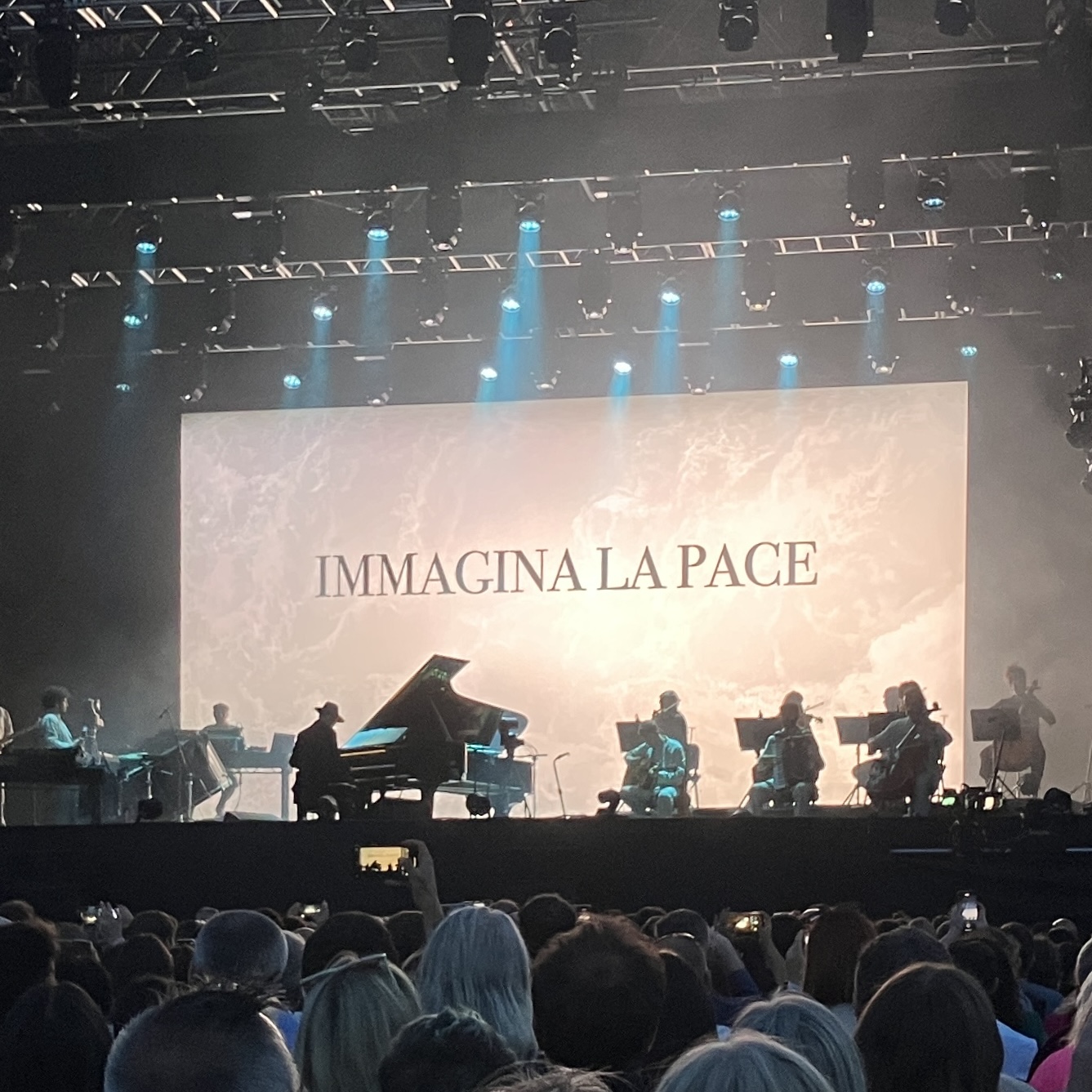

Ludovico Einaudi Playlist – my recordings
Table of Contents
- Background
- Ludovico Einaudi – Le Onde
- Ludovico Einaudi – Eden Roc (1999)
- Ludovico Einaudi – I Giorni (2001
- Una Mattina (2004)
- In a Time Lapse
- Elements
- Seven Days Walking
- Love is a Mystery
After clicking the link to read each section, you can return to the Table of contents using the back button on your browser
Background
Einaudi was born in Turin, Piedmont, in 1955. His father, Giulio Einaudi, was a publisher working with authors including Itali Calvino. His paternal grandfather, Luigi Einaudi, was President of Italy between 1948 and 1955. His mother, Renata Aldrovandi, a gifted amateur pianist, played the piano to him as a child. His maternal grandfather, Waldo Aldrovandi, was a pianist, opera conductor, and composer who emigrated to Australia after World War II.
Einaudi started composing his own music as a teenager, first writing by playing a folk guitar. He began his musical training at the Conservatorio Verdi in Milan, obtaining a diploma in composition in 1982. That same year he took an orchestration class taught by Luciano Berio and was awarded a scholarship to the Tanglewood Music Festival. According to Einaudi, “[Luciano Berio] did some interesting work with African vocal music and did some arrangements of Beatles songs, and he taught me that there is a sort of dignity inside music. I learnt orchestration from him and a very open way of thinking about music.”
He also learned by collaborating with musicians such as Ballaké Sissoko from Malib and Djivan Gasparyan from Armenia. His music is ambient, meditative, and often introspective, drawing on minimalism and contemporary rock.
Ludovico Einaudi’s early compositions in the 1980s used traditional chamber music and orchestral forms, and he created several dance and multimedia pieces which foreshadowed his later work in film and TV soundtracks.
From the mid-Nineties and into the new century, it was his piano-based albums Le Onde (inspired by Virginia Woolf’s novel The Waves), Eden Roc and I Giorni which began to break him through to a popular audience. The title pieces of each of those discs epitomised Einaudi’s trademark qualities of simple, haunting melodies, lucid harmonies and a vaguely mystical sense of being taken on some kind of inner quest. It was meditative music full of inviting spaces. These works suggested that Einaudi was also a little more radical than his detractors might give him credit for.
His willingness to experiment was evident on his second album, Stanze (1992), a group of his compositions performed by Cecilia Chailly (sister of conductor Riccardo Chailly) on the electric harp, creating a startlingly and exhilarating tapestry of sounds.
There is an elitism in the classical music world that rejects Einaudi’s music as repetitive and simplistic. These views are often perpetrated by those who are quick to decry social elitism, while simultaneously displaying a certain academic elitism towards those people who enjoy Einaudi’s music and flock to his concerts.
For example, Philip Clark in a Guardian Review dated 1st August, 2019 provided a scathing attack on Einaudi’s 2019 concert describing his work variously as “unmemorable and humourless”, “soulless”, “unpalatably synthetic” and “cheap” even though Einaudi succeeded in filling the Barbican Hall five nights in a row!
So much traditional music, outstanding and admirable as it is, can suffer from having too many unnecessary passages and an over-concentration of notes. In my humble view, Einaudi’s music, rather than “lacking content”, is in fact rich in content and lacking in clutter. The sayings “less is more” and “simplicity- the key to all good taste” come to mind. It is in this deep sense that I regard his music as Minimalist rather than simplistic.
Ludovico Einaudi’s music regularly tops the classical charts globally and has also proved remarkably adaptable to the era of streaming and downloading. The overlays of electronica on In A Time Lapse (2013) prompted a stampede of download sales, while Einaudi’s Seven Days Walking: Day 1 was the fastest-streamed album ever by a classical composer and exceeded 2 million streams on the day of release.
The evocative clarity of Einaudi’s music has made him a natural choice for advertisers and film makers. Although Einaudi eschews the idea that his music is exclusively classical (e.g. he has repeatedly stated that his music is inspired by “world’, folk song, jazz, rock as well as classical) he is regarded by many as the most successful classical composer of his generation. His music is instantly popular and recognisable.
“I like the idea that something that I hear moves me inside,” says Einaudi, “and sometimes when I play I can feel this happening to the audience. I don’t consider the piano as a job. It’s very connected to my inner feelings.”
Musical taste is subjective and highly personal. Einaudi’s music may be simple, but there is beauty in simplicity, and accessibility in his gentle, inoffensive lyricism, as confirmed by the huge popularity of his music. It may not compete with the complexities and imagination of Messaien, but it is possible to like both. For many, Einaudi’s music provides solace in our uncertain times, and for that reason alone, it has value. Perhaps next time a critic attends a concert where the music says nothing to them, but appeals to a large number of people, they might pause to consider why this is the case.
Ludovico Einaudi – Le Onde
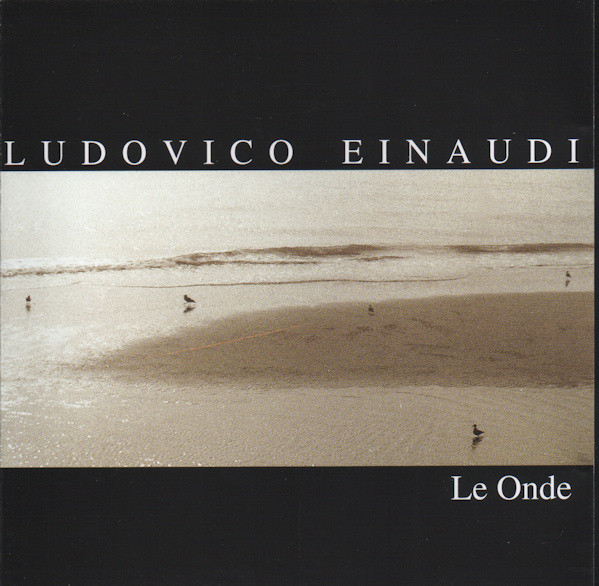
In today’s blog celebrating the piano music of Ludovico Einaudi, I will explore his ground-breaking album “Le Onde” which was released in 1996. Einaudi’s popularity in the UK was mediated by the prevalence of his music on the popular and influential British radio station Classic FM and it immediately drew a huge response from listeners.
Le Onde 1996 (“The Waves”) was inspired by Virginia Woolf’s novel of the same name and was an album comprising 13 tracks. It opens with a short, melodious 16th Century French melody entitled “Canzone Popolare”.
This is followed by the gorgeous title cover song “Le Onde”. Essentially, in this song, Einaudi sets out to explore the ideas behind the waves, time and life. The end result is a highly melodic piece, which successfully captures the rhythm of the waves. The basic melody is constant throughout, but subtly changes at different points, just as one might expect of the waves.
Given the fact that “Le Onde” is one of Einaudi’s early landmark pieces, I leave it to the man himself to play this for you. In my opinion, this is both charming and stylish.
Of the other tracks on the album, my favourite ones are “La Linea Scura” and “Questa Notte”.
“La Linea Scura” (“Dark Line”) refers to the line of the horizon that separates sea and sky. Once again influenced by the writing of Woolf, Einaudi decided to capture in music the description in words by Woolf of the line on the horizon where the clouds meet the sea. I recorded “La Linea Scura” many years ago. I do hope you enjoy it.
“Quests Notte“ (“This Night”) is a celebration of the night and was a great favourite when it was released. It is a piece of some complexity. In my opinion, the phrasing of the piece reminds me that, as a young composer, Einaudi played folk guitar. One certainly sees this influence in the writing of this composition, particularly in the opening sections. One hears resonances of the title track and it is perhaps best to view this composition as a richly textured variation on “Le Onde”. He often played this song as a finale piece in some of his early concerts.
Einaudi attempted to outline his vision of the album with the following words:
“If it were a story it would be set on the seafront of a long beach. A beach without beginning and without end. The story of a man who walks along this shore and perhaps never meets anyone. His gaze lingers occasionally to look at some object or fragment brought from the sea. The footprints of a crab or a solitary seagull. I always take the sand, the sky, some clouds, the sea. Only the waves change, always the same and different, smaller, larger, shorter, longer.”
Ludovico Einaudi – Eden Roc (1999)

“Eden Roc” was written in 1999 and established Einaudi as a household name in both Italy and the UK. There are fifteen tracks in all.
Of the album, Einaudi wrote, “Eden Roc is the name of a place on the south coast of France where the writer Francis Scott Fitzgerald lived and where he located the beginning of his novel ‘Tender is the Night’. From that book I partially took the inspiration for Eden Roc …. the idea of an ideal place where you can find your inner balance in the world”.
‘Nefeli’ is my favourite solo-piano track on this album and is very beautiful. According to Greek mythology, Nephele was a cloud nymph created by Zeus from a cloud in the image of Hera. Einaudi dedicated this song to the daughter of a couple he would regularly visit. Ludovico was inspired by her vivaciousness. Although ‘Nefeli’ is Greek for clouds, it reminded Einaudi of sunshine and this is how he viewed the little girl. The music flows so sweetly that it brightens up my day when I hear it. To play it is a magical experience. I recorded it many years ago and I hope you enjoy my rendition.
‘Due Tramonti’ (‘Two Sunsets’) is the first piece of Einaudi I ever played. It is a piece for piano and cello although Einaudi later transcribed it for solo piano. The music was inspired by a story told to Ludovico by his father. Apparently, when his father was driving with a friend, they saw the most beautiful sunset in the Italian hills. Blown away by the stunning act of nature they had just witnessed, his father put his foot down on the pedal and they hurried up the next hill in order to have the luxury of a second viewing. This was the night they saw two sunsets. The beauty of the piano and cello combination is breathtaking. I recorded the piano solo version in 2011. I do hope you like it.
I love the beautiful lyricism and flow of the track called ‘Julia‘. It conveys a ‘feel’ of the rock melodies prevalent in the early sixties and, consequently, I find it touching and refreshing.
Why not listen to Einaudi’s album “Eden Roc” in its entirety? The music covers a range of moods and feelings and there is a deep sense of friendship among the contributing musicians that emerges through the music. “Eden Roc” was undoubtedly a major landmark in Einaudi’s career.
Ludovico Einaudi – I Giorni (2001
This album’s title translates as ‘The Days’ in English and was released in 2001. It was the first solo-piano follow-up to ‘Le Onde’ and became an almost instant hit on the popular British radio channel, Classic FM. The album is effectively one long lament, with each piece demonstrating Einaudi’s ability to compose utterly simple yet beguiling melodies.
Later on, the title track ‘I Giorni’ had a lot of interest due to Greg James’ airing in June 2011 on BBC Radio 1. It entered the UK Singles charts at number 32 on 12 June 2011. The solo piano track has also been featured on quite a few adverts for arts and culture programmes. By 2019, it had become Einaudi’s second most streamed single.
Einaudi was inspired to compose ‘I Giorni’ after hearing a twelfth-century folk song that originated in the country of Mali. The song describes the killing of a hippopotamus by a hunter, and the subsequent mourning in the local village [1]. It might seem strange then that so many people today choose this piece for their wedding ceremonies but the melody is so beautiful one can appreciate why this is so.
Two of my other favourites from this album are: ‘Stella del Mattino’ (‘Morning Star’) and ‘Limbo’, the first piece of Einaudi’s music I ever heard! It was inspired in part by Radiohead’s music who were enjoying a great deal of success at the turn of the new century.
[1] https://classicalexburns.com/2019/03/19/ludovico-einaudi-i-giorni-a-touching-lament/
Una Mattina (2004)

The following is a lovely statement by Einaudi about his 2004 album. ‘Una Mattina’ contains some of his most moving pieces and many popular works, chief amongst which is the captivating composition ‘Nuvole Bianche’.
“If someone asked me about this album, I would say it is a collection of songs linked together by a story. But unlike my other albums, it doesn’t belong to a time in the past. It speaks about me now, my life, the things around me. My piano, which I have nicknamed Tagore, my children Jessica and Leo, the orange kilim carpet that brightens up the living room, the clouds sailing slowly across the sky, the sunlight coming through the window, the music I listen to, the books I read and those I don’t read, my memories, my friends and the people I love” (Ludovico Einaudi, 2004)
‘Nuvole Bianche’ means ‘White Clouds’. The beauty of Nuvole Bianche is largely due its simplicity. The sense of peace is almost palpable as the music ebbs and flows. Above the rhythmic accompaniment, a lyrical melody comes to the fore. The harmonies are subtle and the alternating chord progressions create an ever changing sense of sadness and happiness. These beautiful mood swings are reminiscent of Chopin. The work is clearly romantic but it has a minimalist structure. The affective subtlety of the piece emerges largely from the constant changes from major to minor chords.
‘Nuvole Bianche’ has featured in many films including ‘Insidious’ (2010), directed by James Wan; the British TV drama ‘This Is England ‘86’ (2010) and the TV series ‘Derek’ (2012), directed by and starring Ricky Gervais. I hope you enjoy my rendition of ‘Nuvole Bianche’ in the video below:
Einaudi has never claimed that his music has intellectual depth. Rather, it conveys the pleasures, happiness’, loves, and longings of the human heart with strikingly moving effect. The powerful tunefulness and the glorious underlying musical themes elevate the music to formally innovative composition. This is illustrated in the wonderful composition on the album entitled ‘Ora’.
‘Ora’ has an enigmatic feel to it and the musical tone and colour lend it an atmosphere of light and dark simultaneously. Whatever one might say about the song musically, it certainly captivates the listener and gives a sense of something that lies beyond. It is one of my favourite pieces by Einaudi, although it is arguably less well-known by audiences.
All the music on the album is composed by Ludovico Einaudi and it is well worth listening to in its entirety.
Titles include Una Mattina; Ora; Resta con Me ; Leo; A fuoco; Dolce droga; Dietro Casa; Come un fiore; DNA; Nuvole nere; Questa volta; Nuvole bianche and Ancora.
In a Time Lapse
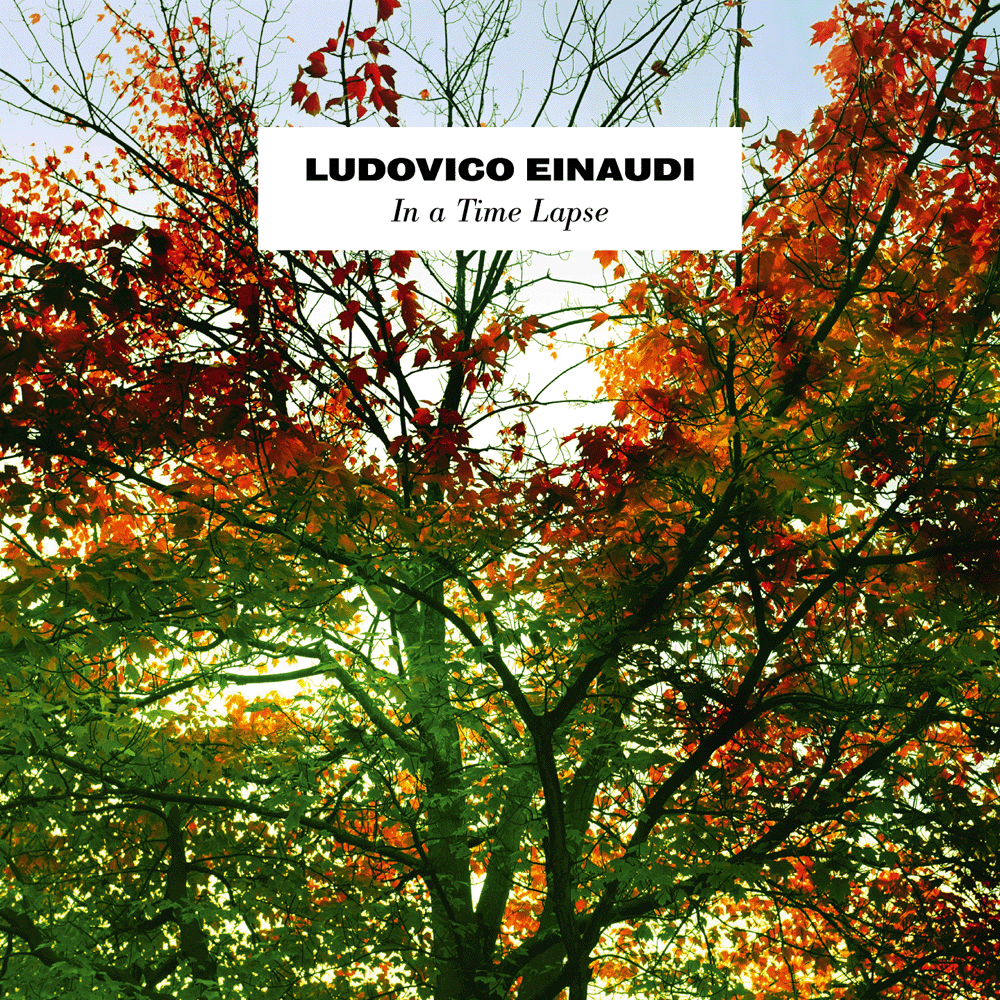
Einaudi’s In a Time Lapse was released on 21 January, 2013. We see in this album a distinct movement towards piano with small-scale orchestration. This enhances both the dynamic range of the music and the harmonic complexity. It also creates a greater diversity of tone and colour. There is a trance-like quality to the music and it is rich in feeling. The reviews of this album were extremely positive when it was first released.
One of my favourite pieces on this album is “Experience”. This is a beautifully lyrical piece and is well-known for its dynamic, energetic central theme. The piece is full of emotional nuance. My recording below attempts to capture the “feel” of this work. In this recording, I have added a small scale string accompaniment.
Elements

On 22 September 2012 Einaudi performed a project called “The Elements” at the Auditorium Parco Della Musica in Rome as a tribute to his mentor, Luciano Berio. The album is inspired by the four elements of air, water, earth, and fire.
The album Elements was released on 16 October 2015. Of the album, Einaudi says: “I saw new frontiers — on the edge between what I knew and what I didn’t know — that I had long wanted to explore: creation myths, the periodic table, Euclid’s geometry, Kandinsky’s writings, the matter of sound and of colour, the stems of wild grass in a meadow, the shapes of the landscape…”
Each track evolves from a theme, proceeding through a series of rhythmic and tonal developments, evoking a journey through an expanding range of thoughts and feelings.
For the first time in his career in anticipation of the album release, Einaudi made available piano scores of two tracks, “Elements” and “Night”, complete with the free original backing tracks.
The title track “Elements” begins with small, “heartbeat” – like gesture on the bass and guitar and enhanced by the Rhodes motif (on the piano). The piece builds to its inevitable climax with the full, momentous force of the string orchestra. The Amsterdam Sinfonietta provides the backdrop to this exhilarating piece of music. The beauty of the piece resides in the centrality of the piano as it weaves its way energetically through to the musical climax towards the end of the piece.
In addition to Einaudi, performers on the album include usual collaborators Francesco Arcuri, Marco Decimo, Mauro Durante, Alberto Fabris, Federico Mecozzi and Redi Hasa, as well as the Amsterdam Sinfonietta string ensemble, Robert Lippok, Mauro Lefosco, and on “Petricor”, violinist Daniel Hope.
This is my recording of ‘Elements’.
Seven Days Walking
Einaudi wrote these beautiful sketches of nature, moods and weather while walking through the snow-capped mountains of Switzerland.

In January 2018, Einaudi frequently went on walks in the Alps, “always following more or less the same trail.” He revealed that during the heavy snow, his “thoughts roamed free inside the storm, where all shapes, stripped bare by the cold, lost their contours and colours,” allowing him to construct the “musical labyrinth” present on the records. The composer also took a series of polaroid pictures, inspiring him to express his thoughts, perceptions and feelings in the music.
Seven Days Walking is a set of albums. The project consists of seven volumes of music released over the course of seven months, beginning with the first volume, Seven Days Walking: Day One, on 15 March 2019. The albums feature Einaudi on piano, Federico Mecozzi on violin and viola, and Redi Hasa on cello. A complete box set of the project was released on 22 November 2019.
Below is my recording of one of my favourite pieces on this album, ‘Golden Butterflies’, I hope this piece conveys something of the beauty and style of this work.
The albums collectively explore the notion that when we view some aspect of the world at different times, we perceive it afresh each time. The world we observe changes subtly, almost imperceptibly. Our perspective of the world, physically, psychologically and emotionally is constantly in flux. This creates in us a sense of a wonder and appreciation of the natural world around us. This fluctuation in our experience of the world is reflected in the thematic variations throughout “Seven Days Walking” where we hear the same melodies couched in slightly different arrangements, rhythms and tonal “colours”. These reflect the often subtle and surprising variations in our perceptions.
Love is a Mystery
Before concluding my exploration of Einaudi’s work it is important to acknowledge his contribution to film music and to contemporary TV and documentary film making. It is almost impossible to watch television without hearing some composition by Einaudi played in the background.
One of my favourites is “Love is a Mystery”. I recorded this lovely composition some time ago. Being a bit of a romantic, I find it both moving and beautiful. I offer you my version below.
“Love is a Mystery” was developed into the main theme for the ITV mini-series of Dr Zhivago (ITV 2002). I think this gorgeous piece of music is a very good place to end my exploration of this remarkable composer.
Ludovico Einaudi is without a doubt one of the most prominent representatives of neoclassicism. I rather suspect there will be many more wonderful compositions flowing from the pen of this graceful, clever and stylish artist.
I leave you with Einaudi’s own version of the theme from Dr Zhivago.
John McGuinness 2024
 John McGuinness Piano